01
Balance & postural control
The moving surface encourages ongoing adjustments through the pelvis, trunk and upper body to help the rider stay organized and upright.
About Mane Motions
Mane Motions Therapy Foundation was founded by occupational therapist Dawn Miller to bring therapeutic riding motion into community settings.
The program uses the MiraColt™ mechanical horse as part of a mobile experience designed for schools, clinics, organizations, events and families who may not have practical access to a traditional equine setting.
Why horse movement matters
Horse movement is rhythmic and multidirectional. As that movement travels through the rider’s pelvis and trunk, the body continually responds with small adjustments in posture, balance, muscle activity and coordination.
That repeated movement can be used as part of therapeutic and developmental activities that challenge the rider to organize their body, maintain alignment, react to changes in motion and build awareness of where their body is in space.
Mane Motions uses those movement principles as the foundation for a carefully planned riding-motion experience.
What is the MiraColt?
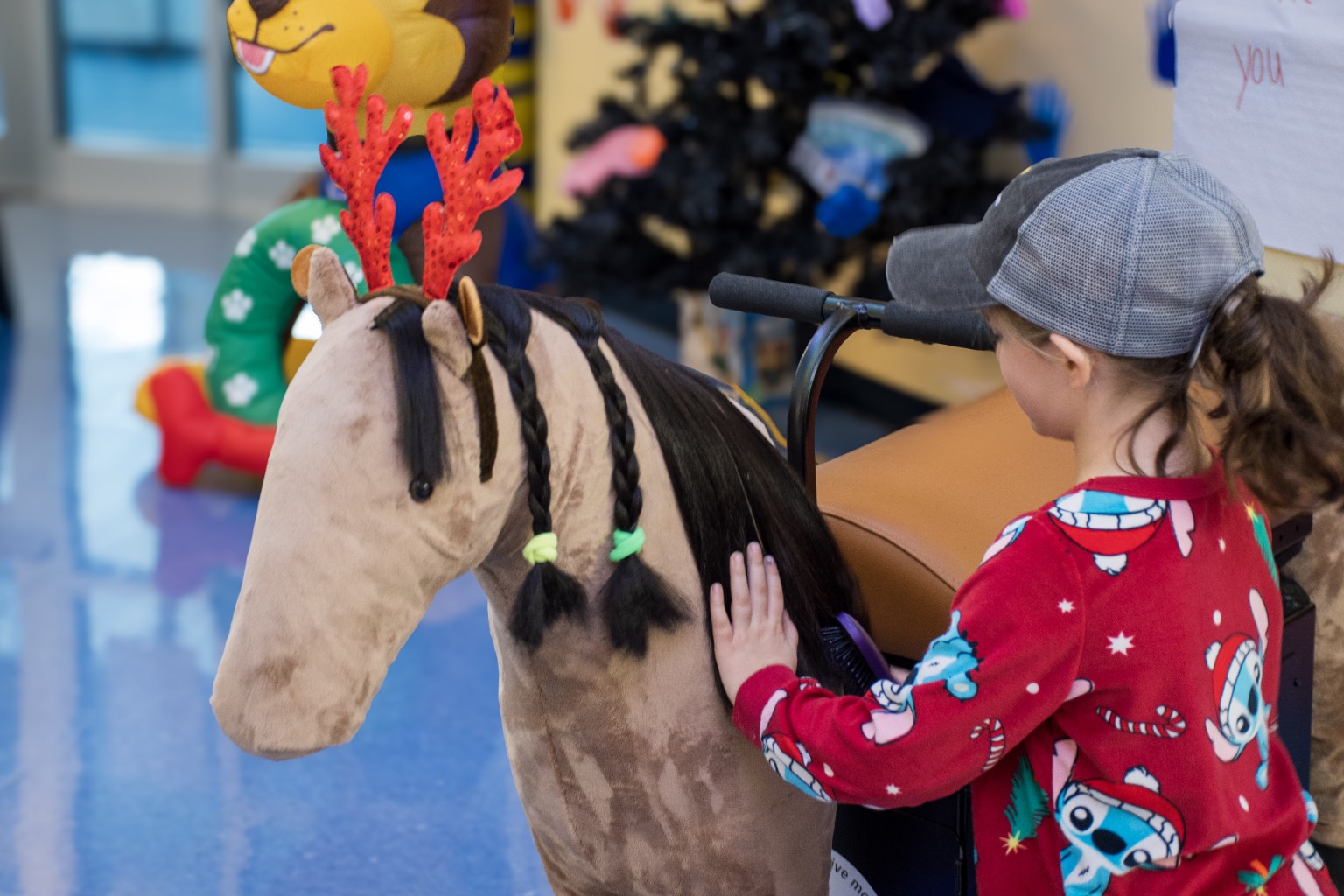
The MiraColt™ is a mechanical horse designed to reproduce the rhythmic, three-dimensional movement pattern of a walking horse in a predictable and controlled setting.
Because the movement can be delivered without transporting a live horse, the MiraColt allows Mane Motions to bring riding-motion experiences into environments where traditional horseback programs may be difficult to access.
It also gives trained professionals and support staff close access to the rider, making it easier to observe posture, provide hands-on assistance when appropriate and pair the movement with purposeful activities.
What riders may work on
Every person is different, and Mane Motions does not promise a specific medical outcome. Depending on the rider, setting and goals, therapeutic riding motion may be used to work on balance, postural control, core activation, coordination, motor responses, sensory-motor input, confidence and participation.
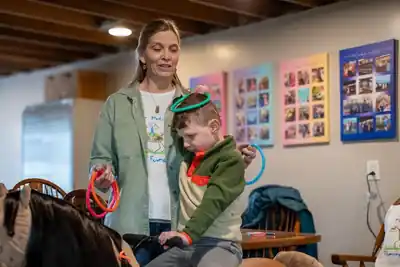
Purposeful activities can be layered into the riding motion so the participant is reaching, timing movements, using both sides of the body and responding to changing sensory information while the MiraColt is moving.
Potential focus areas
Activities can be adapted to the participant, setting and goals. These are areas the experience may be used to work on, not promised outcomes.
The moving surface encourages ongoing adjustments through the pelvis, trunk and upper body to help the rider stay organized and upright.
Rhythmic movement can challenge the muscles that support posture and stability while the rider responds to changes in direction and position.
Riders can practice timing, reaching, bilateral use and other purposeful movements while their body is also responding to horse-like motion.
Movement provides vestibular and proprioceptive input that can support body awareness and processing of changing movement information.
A controlled riding-motion experience can give some participants a more approachable starting point for engaging in equine-related activities.
For some riders, the MiraColt can serve as a bridge for learning positioning, tolerance and movement responses before a traditional riding environment.
Why use a mechanical horse?
Live horses provide unique physical, emotional and relational experiences. The MiraColt does something different: it makes the movement component easier to bring into controlled indoor and community settings.
That can matter when families or organizations face barriers such as distance from a riding facility, weather, transportation, fear of large animals, allergies, limited scheduling options or the need for a more controlled introduction to riding motion.
A practical bridge
The MiraColt can be brought into schools, clinics, community organizations and events, helping participants experience therapeutic riding motion where they already receive services or spend time.
Individualized support
Positioning, speed, support and accompanying activities can be planned around the participant and the goals of the visit.
Founded with clinical experience
Dawn Miller, OTR/L, founded Mane Motions after decades of working with children with neuromuscular, developmental and cognitive challenges.
Her experience using the MiraColt in a clinical environment helped shape the idea of taking the equipment beyond one therapy clinic and creating a mobile outreach model that could reach more children, adults, families and community partners.
Meet Dawn and the Mane Motions team →Start with a simple visit or partnership request and tell us what you would like to explore.